Article reading time
Giving a sustainable gift: what does that actually mean?
Giving sustainable gifts is popular, but what does it actually mean? It goes beyond just a green label on the box. Here is what you can look out for - from materials and certifications to redemption rates and packaging.
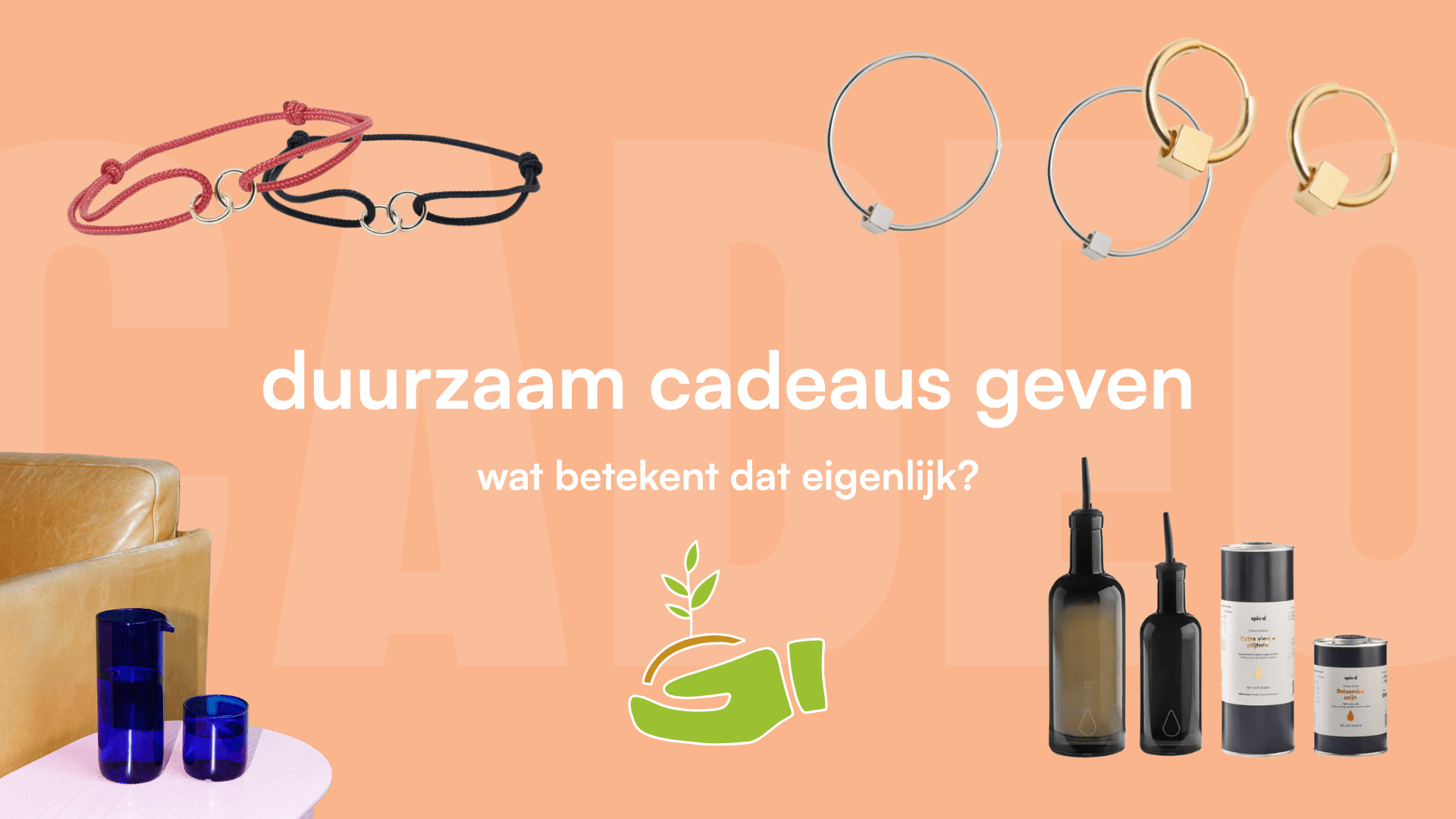
Sustainability is a word that pops up everywhere. On packaging, in mission statements, in the gift supplier's brochure. "Sustainable Christmas hamper", "green business gifts", "eco-friendly gift box." It sounds good. But what does it mean?
A gift is not automatically sustainable because it comes in a cardboard box or because there is a leaf on the packaging. Truly sustainable giving requires you to look a little further. And that doesn't have to be complicated - you just need to know what to look out for.
The ingredients of a sustainable gift
A sustainable gift is the sum of a few factors. No single factor is sufficient on its own, but together they provide a good picture. Here are a few categories:
Materials and production. What is it made of? How was it produced? Were recycled or renewable materials used? Is production energy-efficient? Take BitByBit: for example, they make products from PHA - a biopolymer created through natural fermentation, without fossil resources. Made Out Of makes office products from recycled leather and ships plastic-free and CO2-neutral.
Certifications. B Corp certified, organic, vegan - certifications are not everything, but they do indicate that an independent party has verified that a brand does what it promises. Brands like Wilder Land, Smyle and Retulp undergo external audits.
Lifespan. A gift that ends up in the bin after a week is by definition not sustainable. Products that last for years, such as a Le Creuset water bottle or a Bialetti percolator, are inherently more sustainable than disposable products.
Recognizing greenwashing
Not everything that looks green is green. A few signs that a gift is less sustainable than it seems:
Vague claims without substantiation. "Eco-friendly" and "natural" are not protected terms. Anyone can use them. If there is no certification or concrete explanation, it is often a marketing term.
Green packaging for a non-sustainable product. A gift box made of recycled cardboard is nice, but if the products inside are mass-produced with questionable ingredients, that box does not make it sustainable.
Compensation as the only strategy. CO2 compensation is better than nothing, but it is not a free pass. A brand that first pollutes to the maximum and then compensates is not the same as a brand that tries to reduce emissions at the source.
The redemption rate as a sustainability factor
Sustainability in gifts is often about materials, production, and packaging. But there is a factor that may not be measurable per manufacturer, but is important if you want to give a gift to many people: is the gift actually used?
With traditional gift vouchers, 15 to 20% are never redeemed by the recipient. That is wasted money. A gift that ends up in a drawer is by definition not sustainable, regardless of how it was made.
With choice-based gifts, things are different. Because the recipient gets to choose what they want to receive, the gift is actually used. At Cadeo, the redemption rate is 95%. That is not only nice for the recipient - it is also the most direct way to prevent waste in the gift supply chain.
Sustainable does not have to be boring
The prejudice about sustainable gifts is still often that they are boring. But that image is no longer accurate. Think of the SPIC'D olive oil bottle that brightens up any kitchen, the products from Rebottled that look beautiful on the table or NoWa, which makes jewelry from silver and gold from old phones. The Cadeo range includes many of these impactful brands - from B Corp certified to local and handmade.
Why a choice-based gift is more sustainable than you think
Regardless of which products are in the range, the choice-based gift as a concept in itself is already more sustainable than most alternatives. No boxes shipped to 200 addresses. No Christmas hampers that end up half-untouched in the bin. No packaging material for gifts that no one asked for.
With a choice-based gift, the recipient chooses themselves, so the product is actually used. It is only shipped once a choice has been made - to a single address, and not to a whole list. And with a redemption rate of 95%, you know that almost nothing has been produced for nothing. That might not be the first thing you think of when it comes to sustainability, but it is where a lot of impact lies.
Get in touch and discover what sustainable gift giving can look like in practice.
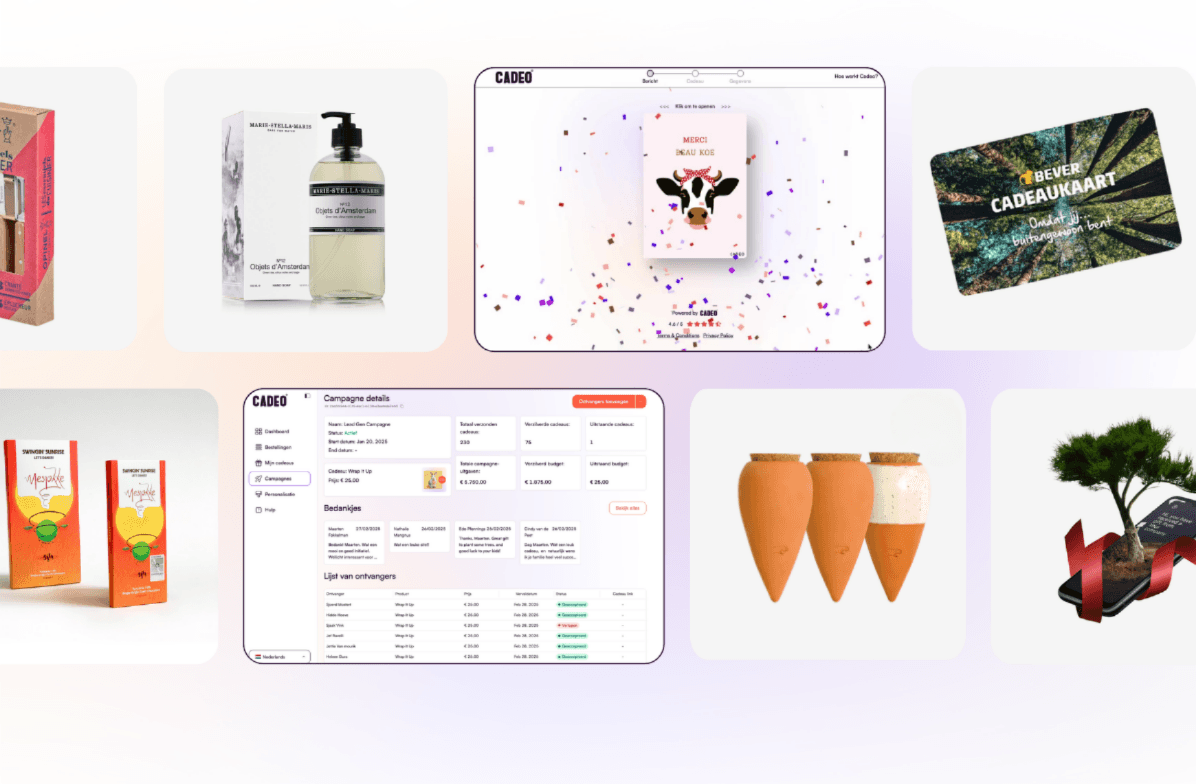
Want to do gifting right as well?
Contact us now to see how we can help you with a tailored solution.


